


Everyone’s got an opinion on what prophecy means, and most of those opinions are wrong, or at least incomplete. Some think it’s basically fortune telling with a religious label stuck on. Others think it’s some code buried in the text, waiting for the right person to crack it open. Both are off. So what is biblical prophecy, if it’s neither of those things?
Short version. It’s a person delivering a message they believe came from God. Sometimes a warning. Sometimes a correction, calling out something people are doing wrong. Sometimes, less often than you’d think, a promise about something further down the road. That’s the whole mechanism once you strip away the mystique around it.
I’m not going to pretend I had some big revelation writing this. I just got tired of people talking past each other on this topic because nobody explained the basics first.
Bible Prophecy Meaning, No Jargon
Ask ten people for the Bible prophecy meaning, and you’ll probably get ten different answers. Mine’s simple. A prophet claims to speak for God. What they say usually falls into one of two piles: “here’s what’s wrong right now” or “here’s what’s coming.” First pile, way more often than the second, honestly. People assume prophecy is mostly about predicting the future. Most of it reads more like a strongly worded letter about present behavior.
Future stuff gets more attention though. Makes sense. It’s the dramatic part.
Old Testament vs New Testament Prophecy
Trips up a lot of new readers, this one. Prophecy doesn’t sound the same everywhere in the Bible. Not close.
Old Testament prophecy is tangled up in Israel’s national story mostly. Isaiah, Jeremiah, Ezekiel. None of these guys sat around writing abstract theology essays for fun. They talked to a specific nation about a specific mess, usually because that nation drifted from a promise made to God years back. Real frustration in these books. Hope too, though, buried in there, more than people expect walking in.
New Testament prophecy shifts. Picks up the same threads, wraps them around Jesus instead. His arrival. His death. Eventually a return a lot of Christians are still waiting on. Revelation’s what people picture when they hear “biblical prophecy,” and it’s written stranger, more symbolic, than most Old Testament prophets bothered with.
Rough way to keep it straight. Old Testament prophecy leans corrective, nation-focused, deals in judgment and eventual restoration. New Testament prophecy leans forward, deals in fulfillment and whatever’s still ahead. Different tone. Same thread underneath both, if you look close enough.
Messianic Prophecy
Even people who aren’t especially religious perk up at this one. Messianic prophecy covers Old Testament passages a lot of Christians believe point straight at Jesus: where he’d be born, how he’d suffer. What role he’d end up playing. Written, by traditional dating anyway, centuries before any of it happened.
For a lot of believers, this is the piece that makes understanding biblical prophecy actually click. Stops feeling like two unrelated stacks of ancient writing. Starts feeling like one long story that just takes a while to get where it’s going.
The Prophets Had It Rough
Easy to skip past this part. Biblical prophets were not popular people. Kings didn’t want to hear their policies were falling apart. Regular folks didn’t want to be told they’d drifted from what they claimed to believe. These guys kept showing up anyway. Said it out loud regardless.
What still gets me, setting the faith angle aside entirely and just reading it as history, is how specific some of it was. Places. Timelines. Occasionally names. Written down long before any of it played out. That specificity is a big part of why Christian biblical prophecy keeps getting studied so closely. Not just by pastors. By regular readers trying to figure out if it holds together at all.
Interpreting This Stuff Responsibly
Slow down even more here, honestly. Knowing Biblical prophecy basics is one thing. Interpreting them well is a different skill entirely, and plenty of well-meaning people botch it. Every few years someone confidently names a date for the end of the world. Every time, wrong. Every single time.
A steadier approach looks at who the original audience actually was, what was happening historically when it got written, how the passage fits the bigger Kingdom of God arc running through the whole Bible. Not a riddle you crack for shock value. Supposed to shape how you live right now, not give you something to speculate about over dinner.
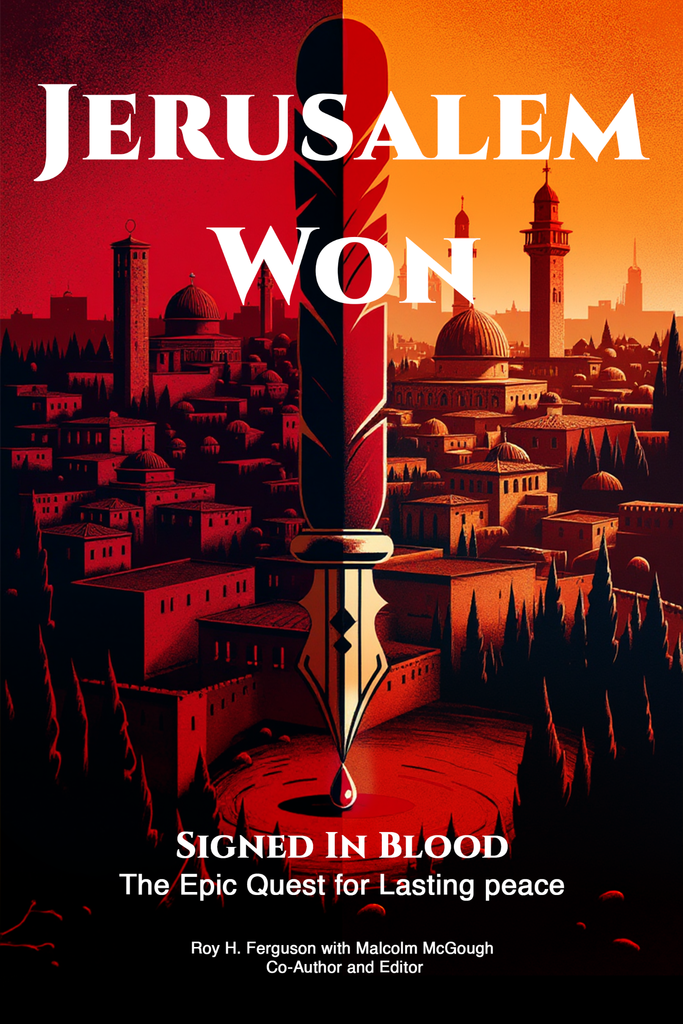
Part of what pulled me toward a book called Jerusalem WON: Signed in Blood. The author Roy H. Ferguson wrote it alongside co-author Malcolm McGough, and it digs into prophetic themes tied to Jerusalem with more depth than a quick Sunday school lesson ever manages. Want more after this Bible prophecy guide? It’s the kind of resource, from Jerusalem Won, worth keeping around.
Trust, Not Fear
Easy to let end times prophecy turn into dread instead of something encouraging. Shame, really, because that’s not the spirit behind most of the Prophetic fulfillment in Scripture. The theme that keeps showing up, all the way from Genesis to Revelation, is that God follows through on what he says he’ll do. Every promise already kept is a decent reason to trust the ones that haven’t happened yet.
One thing worth walking away with. Prophecy was never meant to be about guessing headlines. It’s about trusting someone with an unusually long track record.