


Ever sat through a sermon and thought, “Wait, who even was Habakkuk?” Prophets in the Bible were people God called to speak on His behalf. They delivered warnings, messages of repentance, promises of restoration, and guidance to individuals, kings, and nations. They weren’t simply fortune tellers; their messages often addressed real spiritual and historical circumstances.
You’ll encounter prophets throughout many books of the Old Testament, especially in the historical and prophetic writings. Their messages are also frequently quoted and referenced in the New Testament. Some wrote entire books that became part of Scripture, while others appeared in a brief but significant episode before disappearing from the biblical narrative. Either way, once you understand who the biblical prophets were and what they were called to do, many parts of Scripture become easier to understand.
What Set Someone Apart as a Prophet in Scripture
A prophet in the Bible was a person called or commissioned to deliver a message from God. Biblical prophets often warned people about wrongdoing, called them to repentance, addressed kings and nations, encouraged faithfulness, and sometimes spoke about future events.
Biblical prophets came from different backgrounds. Amos, for example, described himself as a shepherd and cultivator of sycamore figs before his prophetic ministry. Others served as priests, advisors, or leaders. What connected them was their prophetic calling and their role in communicating messages they believed came from God.
What Did the Prophets in the Bible Do?
So what did this job look like on an actual day? Depended a ton on who was ruling and whatever crisis happened to be blowing up at that moment. A few things kept repeating, though.
Biblical prophets and their roles, and really the whole role of biblical prophets in general, came down to a handful of repeating things: warning kings and nations about what happens when they turn from God, announcing judgment while somehow tucking in a promise of restoration right alongside it, making sense of political disaster while it was still unfolding rather than years after the fact, and pushing people back toward the covenant even when that cost them something real, personally. A lot of them also pointed forward toward a coming Messiah, which is exactly why New Testament writers lean on them so heavily, quoting lines from centuries earlier like they’re brand new.
Not a glamorous gig, by the way.Jeremiah was lowered into a cistern because of his prophetic message.
Who Were the Major and Minor Prophets?
The terms “Major Prophets” and “Minor Prophets” refer primarily to the length of the prophetic books, not the importance of the prophets or their messages. The Major Prophets traditionally include Isaiah, Jeremiah, Ezekiel, and Daniel. Lamentations is often grouped with Jeremiah in traditional Christian arrangements, but it is distinct from the prophetic books.
Isaiah gets remembered for prophecies tied to the coming Messiah, plus warnings about Jerusalem’s eventual fall. Jeremiah earned the nickname “weeping prophet” for warning Judah decades before everything came crashing down around them. Ezekiel delivered visions from exile in Babylon that still read as strange, almost surreal, even now. Daniel tangled wisdom and prophecy together while somehow staying loyal to God inside a foreign court that didn’t share his beliefs at all.
Long books. Dense imagery. Still getting picked apart in sermons every single week, somehow, thousands of years later.
The Twelve Minor Prophets
The same logic applies here, more or less. Minor just means shorter, not smaller in weight or importance. Twelve of them total, sometimes grouped together as “The Twelve” in Jewish tradition.
| Minor Prophet | Known For |
| Hosea | God’s relentless love despite Israel’s unfaithfulness |
| Joel | A locust plague used as a picture of judgment |
| Amos | A shepherd calling out social injustice |
| Obadiah | Judgment against Edom |
| Jonah | Reluctant obedience, God’s mercy toward Nineveh |
| Micah | That famous line about justice, mercy, and humility |
| Nahum | Judgment on Nineveh, decades after Jonah |
| Habakkuk | Wrestling out loud with God about injustice |
| Zephaniah | Warnings paired with hope for a faithful remnant |
| Haggai | Pushing the exiles to finally rebuild the temple |
| Zechariah | Strange, vivid visions pointing toward the Messiah |
| Malachi | A call to covenant faithfulness |
Put that table next to the four major prophets, and you’ve basically got the whole Old Testament prophets list sitting right there.
A Few Names Everyone Recognizes
A few famous prophets in the Bible go beyond the “Major” and “Minor” labels and don’t fit neatly into either group. Moses is described as a prophet in Scripture and plays a foundational role in Israel’s story. Elijah and Elisha did not write books of the Bible, yet their confrontations with kings are among the most dramatic accounts in the Old Testament. Samuel also played an important role in Israel’s history, including anointing both Saul and David as kings.
Women Who Carried the Prophetic Voice
Worth stating plainly here. Women prophets in the Bible held real, active roles, never just footnotes tucked into the margins. Miriam led worship right after the Red Sea crossing and gets called a prophetess directly in the text, no hedging around it. Deborah judged Israel and directed military strategy while also speaking prophetically, a combination you honestly don’t see paired together often. Then there’s Huldah, who confirmed a rediscovered scroll of the law was genuine during King Josiah’s reign. Huldah’s confirmation of the scroll was followed by reforms under King Josiah, including renewed attention to the covenant and worship practices described in 2 Kings 22–23.
Where the Story Continues in the New Testament
Prophetic activity also appears in the New Testament. John the Baptist is presented as a prophetic figure, while Agabus is explicitly described as a prophet in Acts. Other New Testament passages also discuss prophecy within the early Christian community.
Together, the Old and New Testament accounts show how prophetic messages addressed repentance, faithfulness, judgment, restoration, and future hope. To understand the different forms these messages can take, read our guide to Types of Biblical Prophecy: A Guide to Prophetic Messages.
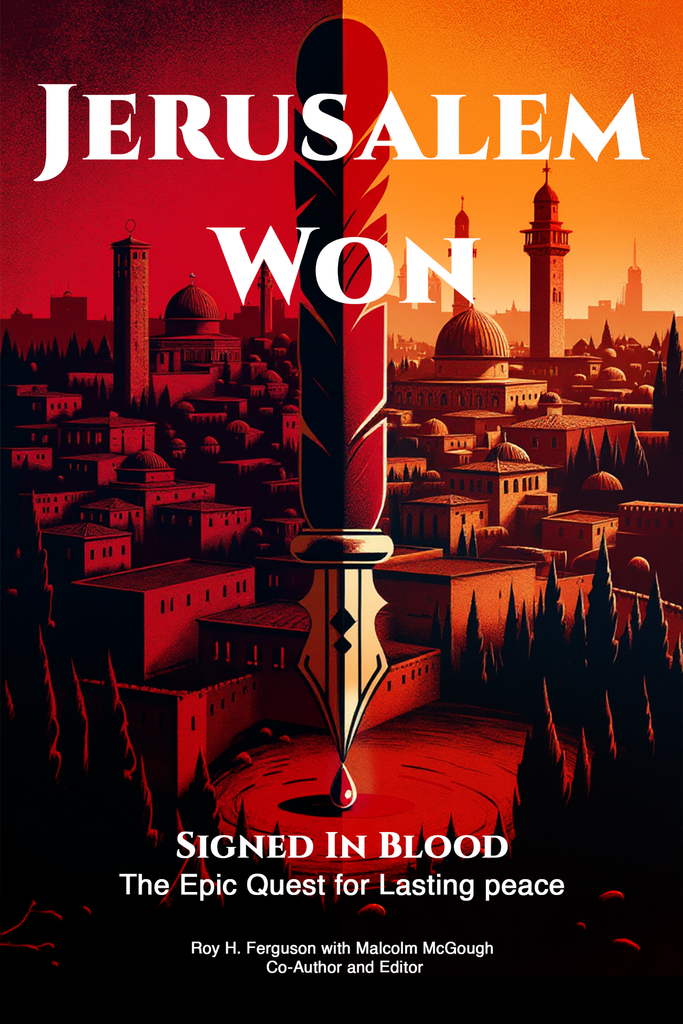
Readers interested in biblical prophecy and its connection to Jerusalem and Israel can also explore Jerusalem WON: Signed in Blood by Roy H. Ferguson and Malcolm McGough.
What This Still Means for You
Bottom line, prophets in the Bible weren’t just old figures shouting warnings into empty space. That’s what prophets in Scripture really come down to: people willing to say something true when it costs them. Isaiah’s poetry. Jeremiah’s grief. Amos calling out injustice with zero patience left for excuses. It still lands, weirdly. People haven’t changed nearly as much as we’d like to think.
FAQs
Mostly the four major ones, Isaiah, Jeremiah, Ezekiel, Daniel, plus the twelve minor prophets. Then you’ve got Moses, Elijah, Elisha, and Samuel too; honestly, some of the biggest names never even wrote a book. Doesn’t make them less important; it just means the Bible remembers them differently.
Just book length; that’s really it. Longer book, major prophet. Shorter one, minor. People assume minor means less important, which isn’t true at all. Both groups carried the same weight; both tied straight back to Prophets in the Bible and Israel’s whole covenant story with God.
Yeah, a few actually. Miriam, Deborah, Huldah- all called prophetesses right there in the text, no hedging, no footnote treatment. Different jobs, though: worship, military strategy, confirming a scroll was real. Kind of proves the prophetic calling wasn’t some men-only thing back then.